Follow Us


Looking for the best things to do in Palma? We are Social Club, a nightclub on the Paseo Marítimo, and we are here all year round. That means we know the city not as a place we visited once, but as home. This is our full guide to Palma de Mallorca, from the Gothic old town and the cathedral to the food markets, the beaches and the seafront after dark. Not just the nightlife we are known for, but everything that makes a day in Palma worth planning around.
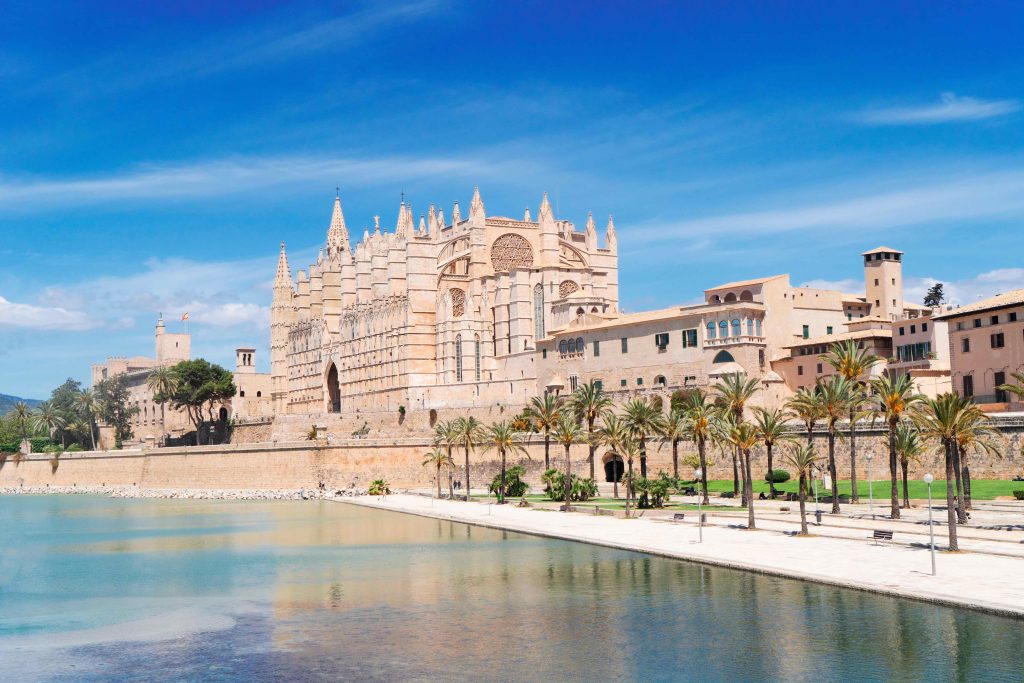
The best things to do in Palma, day and night
Plenty of people arrive in Mallorca, head straight for a beach resort and never see the capital. We think that is a mistake. Palma is one of the most complete city breaks in the Mediterranean, and it packs a surprising amount into a small, walkable centre. You get a huge Gothic cathedral on the water, a maze of honey coloured streets, a genuinely exciting food scene, sandy beaches inside the city limits, and a seafront that comes alive once the sun goes down.
Palma de Mallorca is best known for the cathedral known as La Seu, its old town, its harbour full of yachts, and a relaxed island pace that somehow sits next to a real appetite for going out. You can spend the morning looking at 14th century architecture and the same night on a dancefloor by the sea. That range is exactly why we love it, and it is why this guide runs from morning right through to the early hours.
Get lost in the old town (Casco Antiguo)
Start where the city started. Palma’s old town, the Casco Antiguo, is a tangle of narrow lanes, quiet courtyards and shaded squares that reward anyone happy to wander without a fixed plan. The yellow sandstone buildings glow in the late afternoon, wrought iron balconies hang over the streets, and every corner seems to open onto a cafe, a church or a tucked away shop.
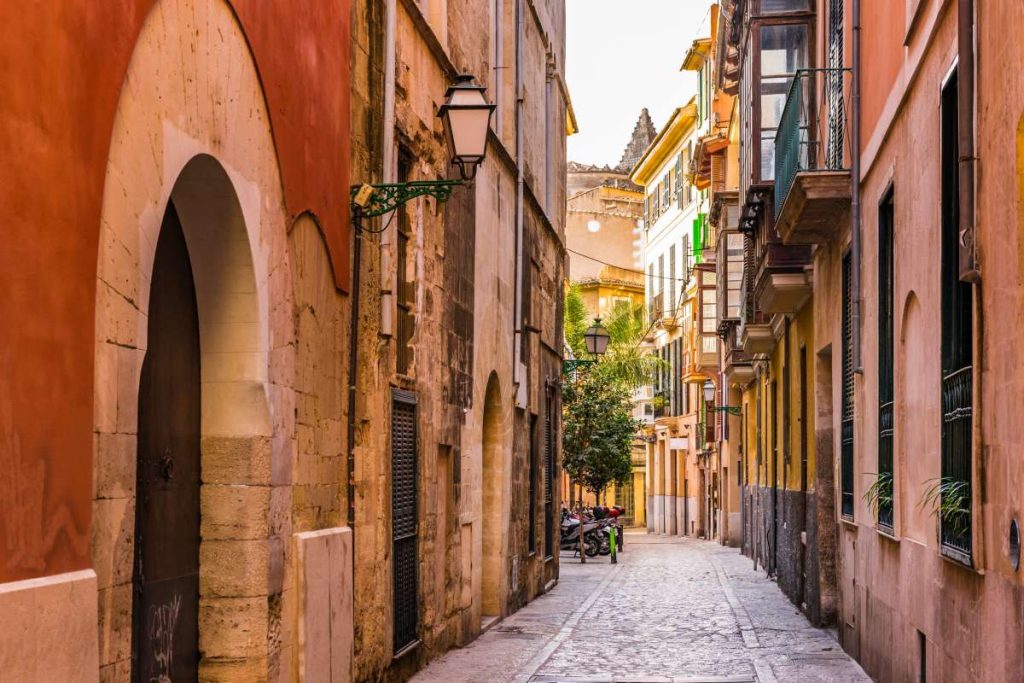
Make your way to Plaça Major, the grand arcaded square at the heart of it all, then drift down to Plaça de Cort to see the old olive tree and the town hall facade. You will pass boutiques, tapas bars and hidden patios along the way. Mornings are the calmest time to explore before the day trippers arrive, and dusk is the prettiest. Honestly, getting a little lost here is one of the best free things to do in Palma.
Good to know
Free to wander, any time of day. The old olive tree in Plaça de Cort is said to be several hundred years old, and Plaça Major sits on the site of the former headquarters of the Spanish Inquisition on the island. Come early or at dusk for the quietest streets and the best light.
See Palma Cathedral (La Seu)
If Palma has one unmissable landmark, this is it. The Cathedral of Santa Maria, known locally as La Seu, rises straight out of the waterfront and dominates the skyline for miles. Built in golden sandstone over more than 300 years, it is one of the largest Gothic cathedrals in Europe, with a soaring 44 metre nave and an enormous rose window that throws colour across the stone whenever the sun is out. Antoni Gaudí left his mark inside during the early 20th century, so there is more to see than the outside alone.
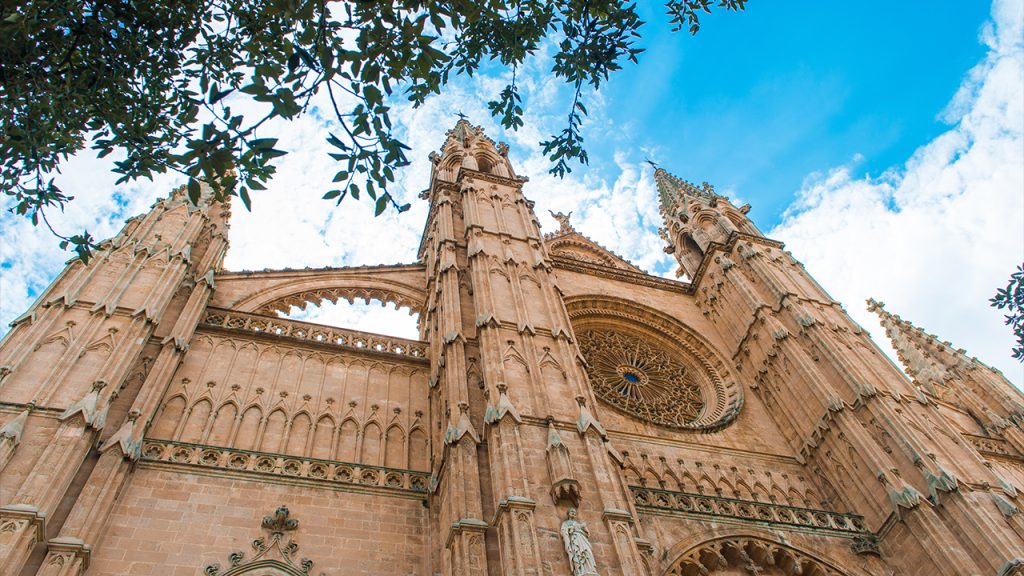
Standard entry is around €10, and you can add a rooftop terrace visit for views over the bay. It is one of the busiest attractions in the city, so book a ticket in advance if you would rather not queue. Even if you only admire it from Parc de la Mar across the water, with the cathedral reflected in the pool below, it is a genuine highlight of any trip to Palma.
Good to know
Standard entry is around €10 and includes the museum, with reduced rates for seniors and students and free entry for Balearic residents and young children. Open Monday to Saturday, roughly 10:00 to 18:15, and closed on Sundays for worship. The rose window is one of the largest in the Gothic world, and both Antoni Gaudí and the artist Miquel Barceló left work inside.
Visit the Royal Palace of La Almudaina
Directly opposite the cathedral stands the Royal Palace of La Almudaina. It began as a Moorish fortress and later became a royal residence, so its rooms mix Islamic and Gothic styles in a way you do not see everywhere. It is still the official residence of the Spanish royal family in Mallorca, used mainly for ceremonies these days.
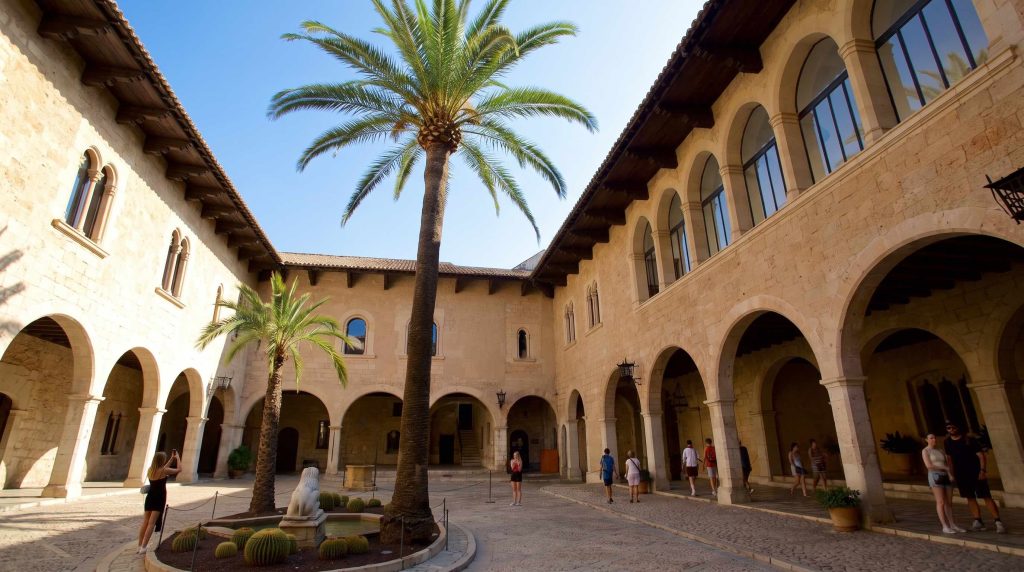
Entry is around €8, and inside you can walk the royal apartments with their tapestries, antique furniture and artworks, then step out to the terrace and gardens for more views over the port. Paired with the cathedral next door, it makes an easy morning of history right in the centre of the city.
Good to know
Entry is around €7. Open Tuesday to Sunday, roughly 10:00 to 20:00 in summer and 10:00 to 18:00 in winter, closed on Mondays. The palace as you see it was built between 1305 and 1314 for King James II, and it is still one of the official residences of the Spanish royal family today.
Step back in time at the Arab Baths
Tucked away in the old town, the Arab Baths, or Banys Àrabs, are one of the very few surviving pieces of the Moorish city that stood here when Palma was called Medina Mayurqa.
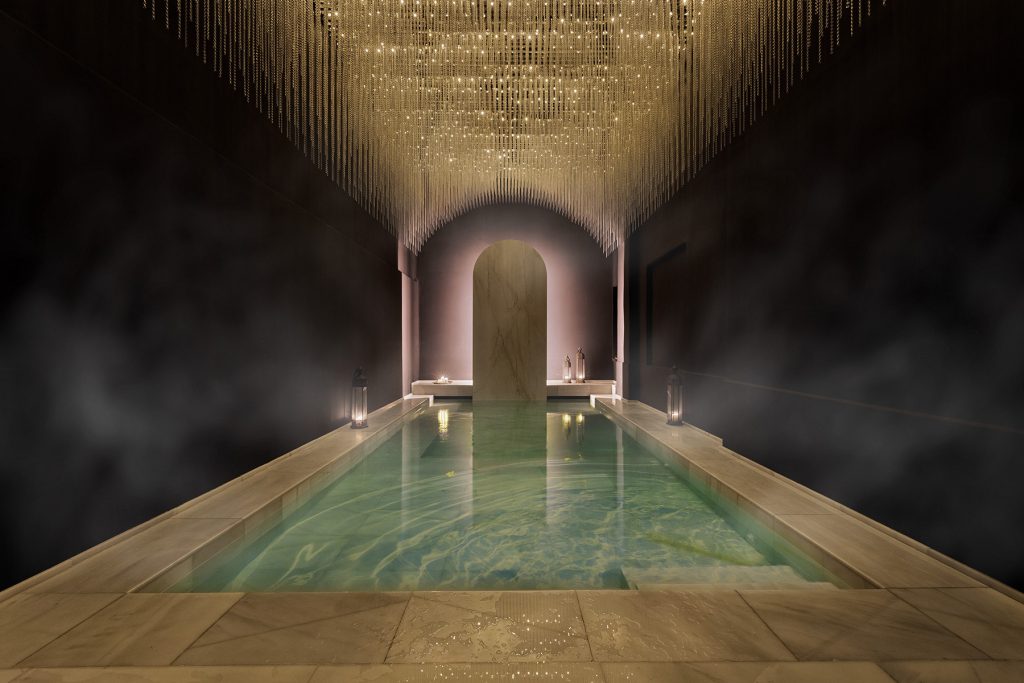
Built around the 10th to 12th century, the small domed chamber with its light pierced roof was once part of a grand manor house. It does not take long to look around, and entry is only a few euros, but it is a quiet, atmospheric window into a completely different chapter of the city, with a shady garden to pause in afterwards. Tickets available direct on their website.
Good to know
Entry is around €3, open daily from roughly 09:00 to 19:30 in summer and to 18:00 in the cooler months. Look up inside the domed room: the small round skylights were designed to let daylight fall like stars, and the columns holding it up were salvaged from older Roman buildings, so no two match.
Climb to Bellver Castle for the views
For the best panorama in the city, head up to Castell de Bellver, the hilltop castle about 3 km west of the centre. Built in the 14th century as a royal residence, it is the only fully circular castle in Spain and one of just a handful in Europe. It later served as a prison before becoming a museum, and today it holds the city history collection.
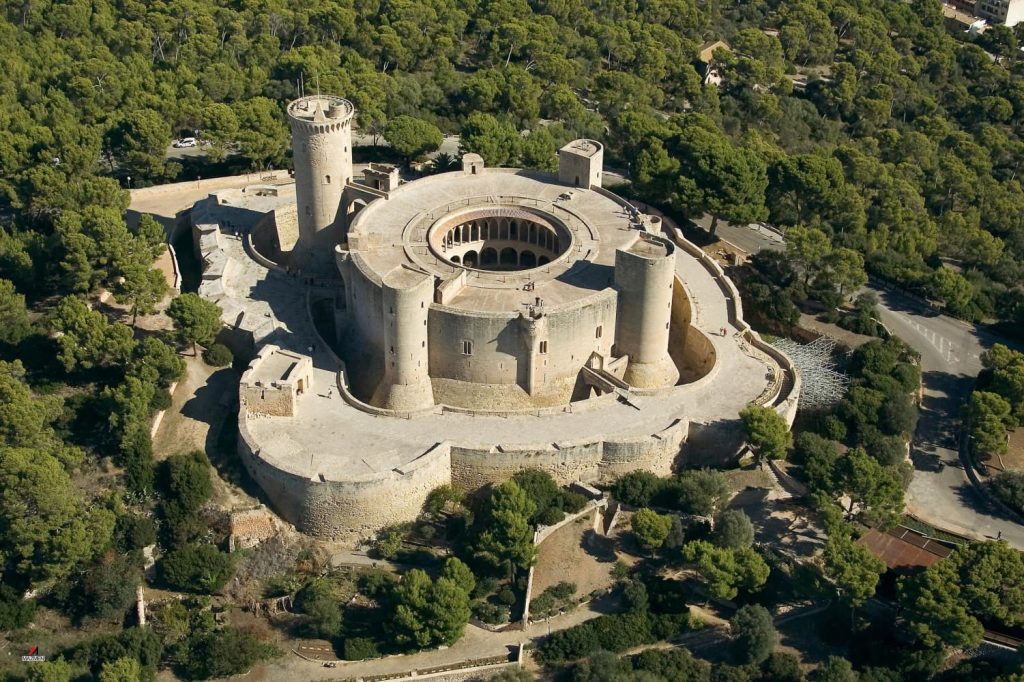
From the rooftop you get a 360 degree sweep over Palma, the bay and the Tramuntana mountains beyond. Entry is around €4 and it is free on Sundays. You can walk up through the pine woods in roughly 45 minutes, take a local bus, or catch the sightseeing bus that stops nearby. The name means beautiful view, and it lives up to it.
Good to know
Entry is around €4, with EU citizens paying about €2 and under 14s free, and it is free on Sunday afternoons. Open Tuesday to Saturday, roughly 10:00 to 19:00 in summer and to 18:00 in winter, Sundays 10:00 to 15:00, closed on Mondays. It is the only fully circular castle in Spain, and one of just a handful in Europe.
Explore Palma’s art and museums
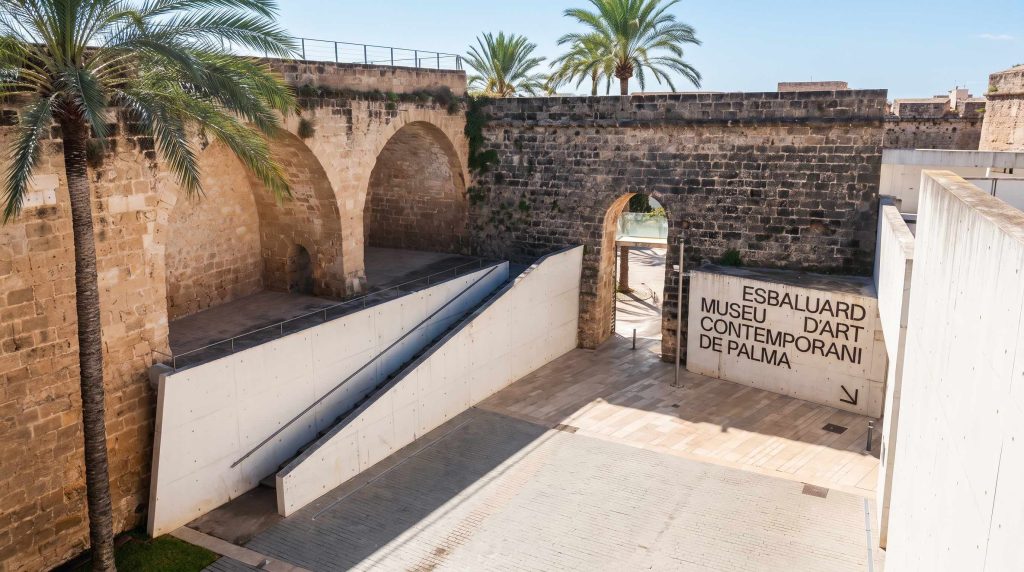
Artists have been drawn to Mallorca for generations, and Palma is where you see the results. The standout is Es Baluard, the Museum of Modern and Contemporary Art, built into the old sea walls with more than 700 works by mostly Mallorcan artists and terraces looking out over the harbour. Entry is around €6.
A little further out, the Fundació Miró Mallorca sits on the site of Joan Miró’s own studio, where you can see paintings, sculptures and the space he actually worked in. For something more opulent, the Palau March displays sculptures by Rodin and Moore alongside rare books inside a lavish private palace. Between them, they cover everything from island craft to world names, and most are an easy walk or short bus ride from the centre.
Good to know
Es Baluard is around €6 (Tuesday to Saturday 10:00 to 20:00, Sundays to 15:00, closed Mondays), and its rooftop terrace over the bay is free to visit, with Fridays run on a pay what you wish basis. At the Fundació Miró you can walk into the studios where Joan Miró actually painted and sculpted for nearly 30 years, kept much as he left them.
Eat your way through the food markets
Palma runs on its markets, and they are some of the most enjoyable places to spend an hour or two. The Mercat de l’Olivar, near Plaça d’Espanya, is the big central one, piled high with fresh fish, meat, fruit, cheese and olives. Head to the seafood counters and grab a stool at one of the bars for oysters, squid or whatever came in that morning.
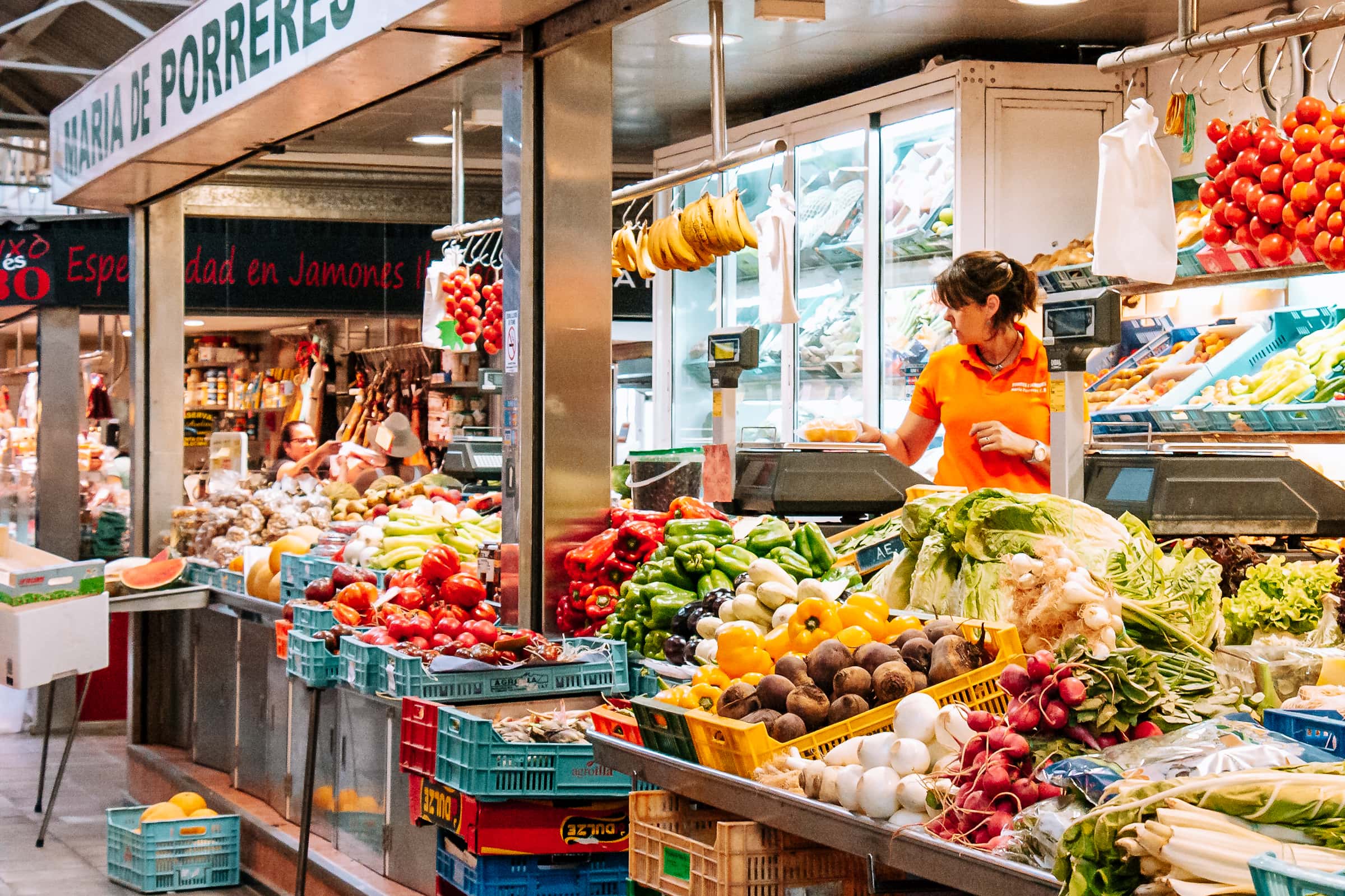
Over in Santa Catalina, the Mercat de Santa Catalina is the city’s oldest food market and a favourite with local chefs. It is smaller and buzzier, ringed by bars and cafes where a plate of tapas and a glass of wine is the natural way to pass the middle of the day. Either one is a proper taste of how Palma actually eats.
Good to know
Both markets are free to walk around and are open Monday to Saturday, mornings through to mid afternoon, and quietest first thing. The Mercat de Santa Catalina opened in 1920 and is the oldest food market in the city. Come hungry, and treat the bar stools at the seafood counters as the main event.
Spend an afternoon in Santa Catalina
Just west of the centre, Santa Catalina is the neighbourhood locals send you to when you want to eat and drink well. It started as a fishermen’s quarter, and you can still spot old windmills along Carrer de la Indústria, but today its colourful streets are lined with independent restaurants, wine bars and coffee spots, with tables spilling onto the pavements.
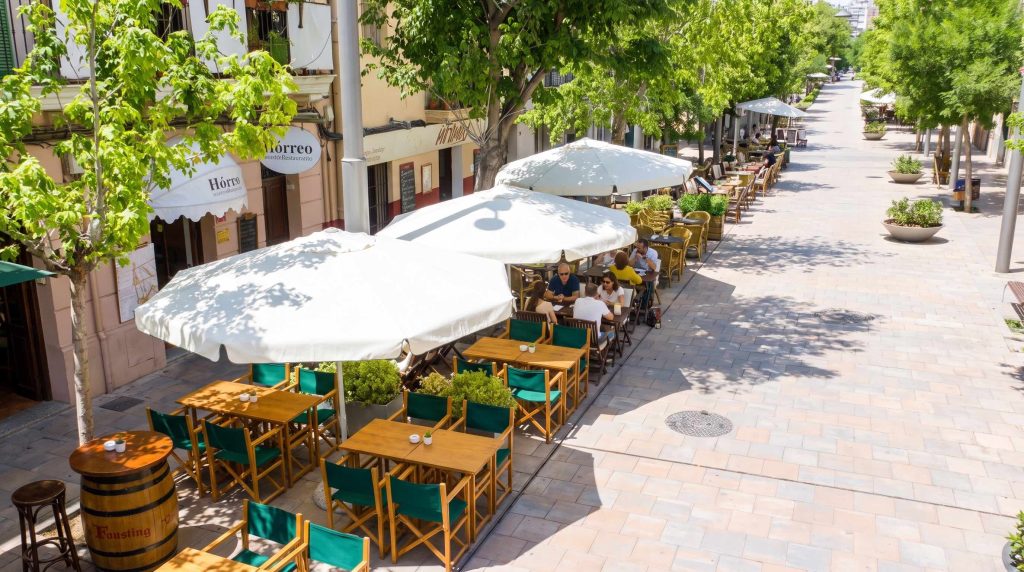
It is a great place to slow down in the afternoon and an even better one to come back to in the evening, when the whole area fills up and the tables outside stay busy long after dark. If you only have time for one neighbourhood beyond the old town, make it this one.
Walk the Paseo Marítimo
This one is close to our heart, because it is where you will find us. The Paseo Marítimo is Palma’s seafront promenade, a long flat walkway that runs for around 3 km along Avinguda de Gabriel Roca, shared between walkers and cyclists, with the marina and its yachts on one side and the city on the other.
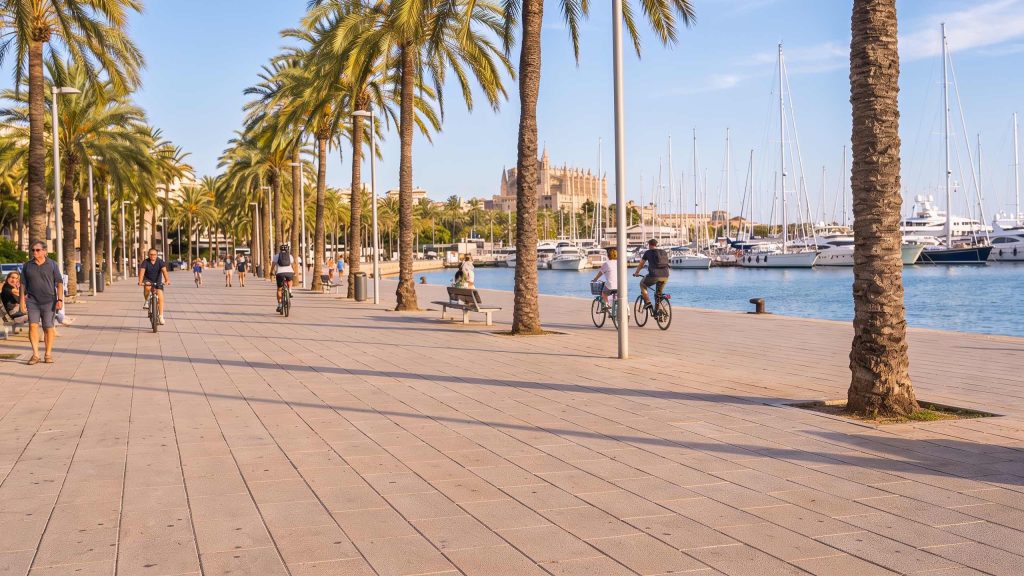
Early morning and late afternoon are the loveliest times for a stroll, with the cathedral catching the light across the water. But the Paseo Marítimo has a second life after sunset, when it becomes the beating centre of the city’s going out scene. We will come back to that. For now, know that this stretch of seafront is one of the most enjoyable walks in Palma at any hour, and it is right on our doorstep.
Hit the beach without leaving the city
One of the best things about Palma is that you do not have to choose between a city break and a beach day. Closest to the centre is Can Pere Antoni, a 750 metre stretch of sand just east of the old town where you can swim with the cathedral in view. Keep walking towards the old fishing quarter of Portixol and you pass a string of small sandy coves, whitewashed houses and seafront cafes that make a perfect lazy morning.
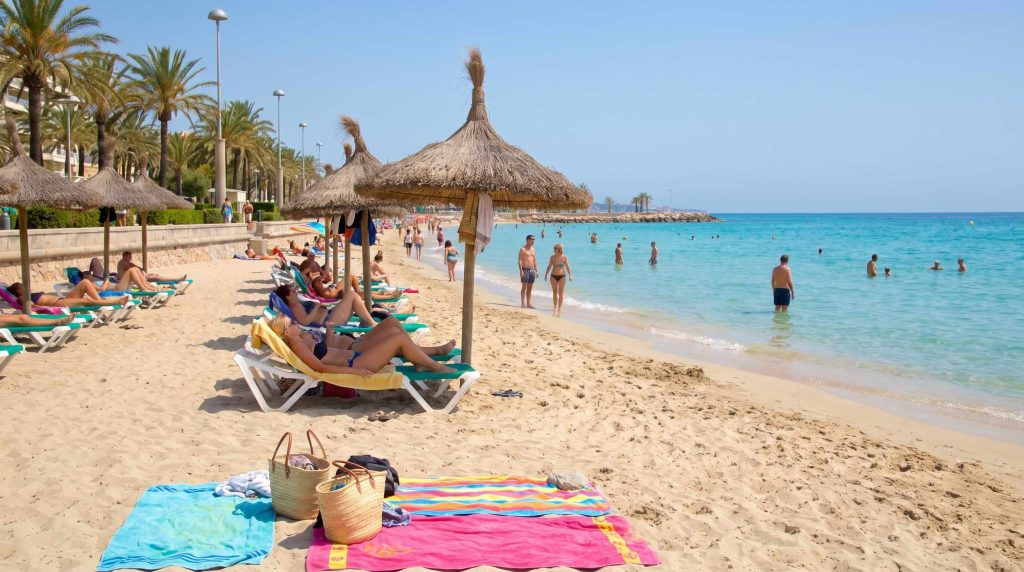
For something bigger, Playa de Palma runs for almost 5 km a short bus ride east of the centre, with sunbeds, watersports, a flat cycle path the whole way and space for everyone. It is Blue Flag listed with lifeguards, which makes it a reliable choice for families.
Good to know
Can Pere Antoni is a short walk east of the old town and free to use. Playa de Palma runs for almost 5 km and holds Blue Flag status for its water quality and facilities, with a flat cycle path linking it back to the centre. For the prettiest swim, aim for the small coves around Portixol early in the day.
Get out on the water
Palma looks its best from the sea, so if you have the time, get out on it. Boat trips leave from the port and range from short one hour cruises to half day sails, and seeing the cathedral and Bellver Castle rise up from the water is a completely different experience to walking past them.
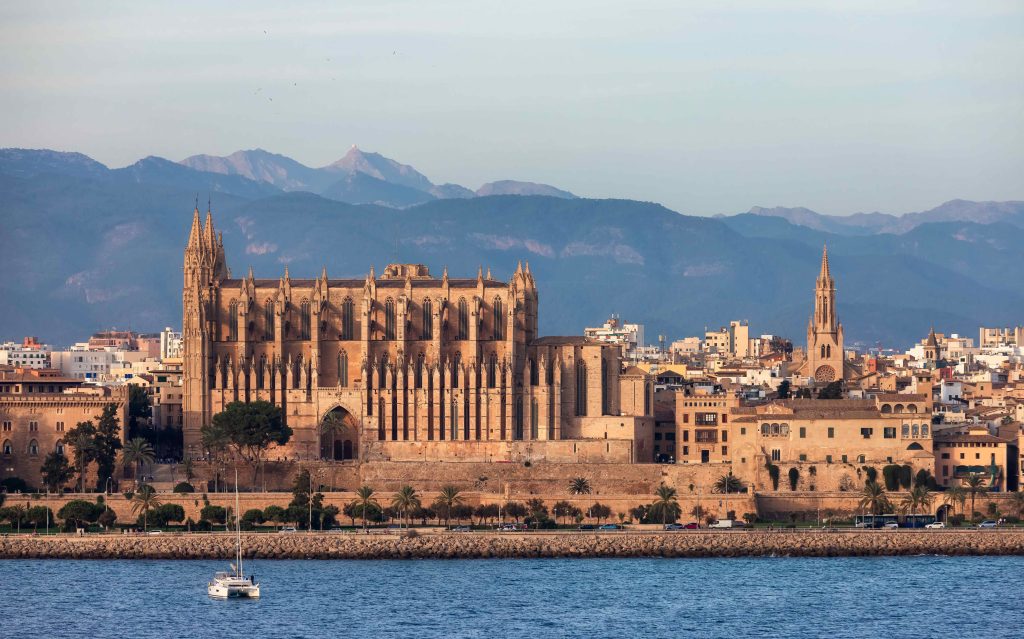
If you would rather be hands on, you can also hire a boat with or without a skipper and explore the Bay of Palma at your own pace, or try kayaking, paddleboarding and other watersports from the shore.
Take the scenic train to Sóller
If you have a spare day and want to see beyond the capital, the vintage train to Sóller is the classic Palma day trip.
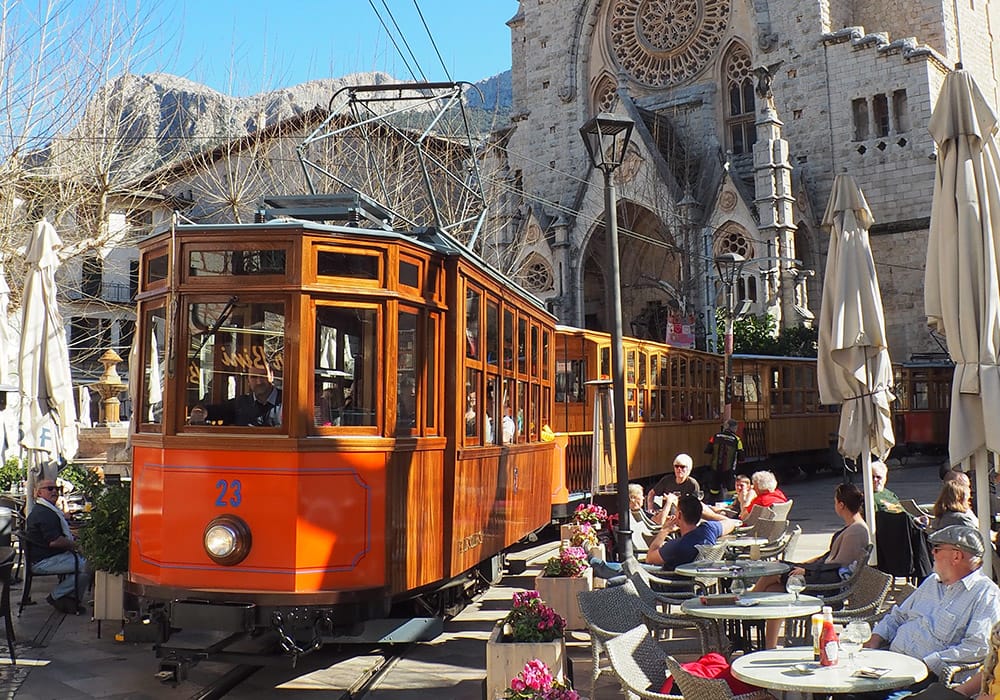
The historic wooden carriages leave from the main station in the centre and wind north through the Tramuntana mountains, crossing bridges and tunnels on the way to the pretty town of Sóller in just over an hour. From there, an old tram rattles down to Port de Sóller on the coast, where you can swim, eat by the harbour and take in the views before heading back. It runs most of the year and is worth the fare for the scenery alone.
Good to know
A one way ticket runs from around €23, and a combined train and tram return is roughly €32. The line opened in 1912 to carry oranges over the mountains, and it still covers the 27 km through 13 tunnels and over a tall stone viaduct in its original wooden carriages. Note that it usually closes for maintenance from mid December to late January, so check before you plan around it.
Shop for something genuinely local
Palma is a lovely city to shop in, and we do not mean the chain stores. The old town and the streets around it are full of independent makers worth seeking out.
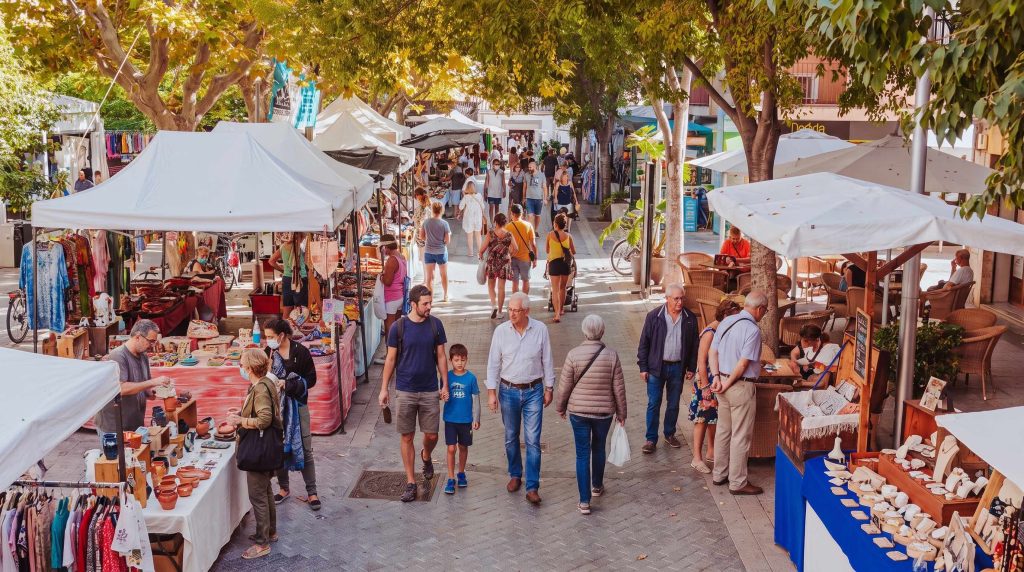
There is Gordiola for handblown Mallorcan glass, artisan perfumers working out of century old townhouses, and shops dedicated to woven and rattan work that has been made on the island for generations. Wandering these streets with no particular list is a pleasure in itself, and you will come home with something far better than a fridge magnet.
Good to know
Gordiola has been making glass on the island since 1719, one of the oldest names of its kind in Spain, and still blows pieces by hand. Most of the independent shops cluster in the old town and around Carrer de Sant Feliu and the streets behind the Passeig del Born, and they tend to keep Spanish hours, so expect a long lunchtime pause in the afternoon.
Experience Palma after dark
Here is the part most guides skip, and the part we know better than anyone. Palma is a wonderful city by day, but it truly comes into its own at night, and the evening deserves as much planning as the sightseeing. This is our home ground, so here is how we would build a night out in Palma.
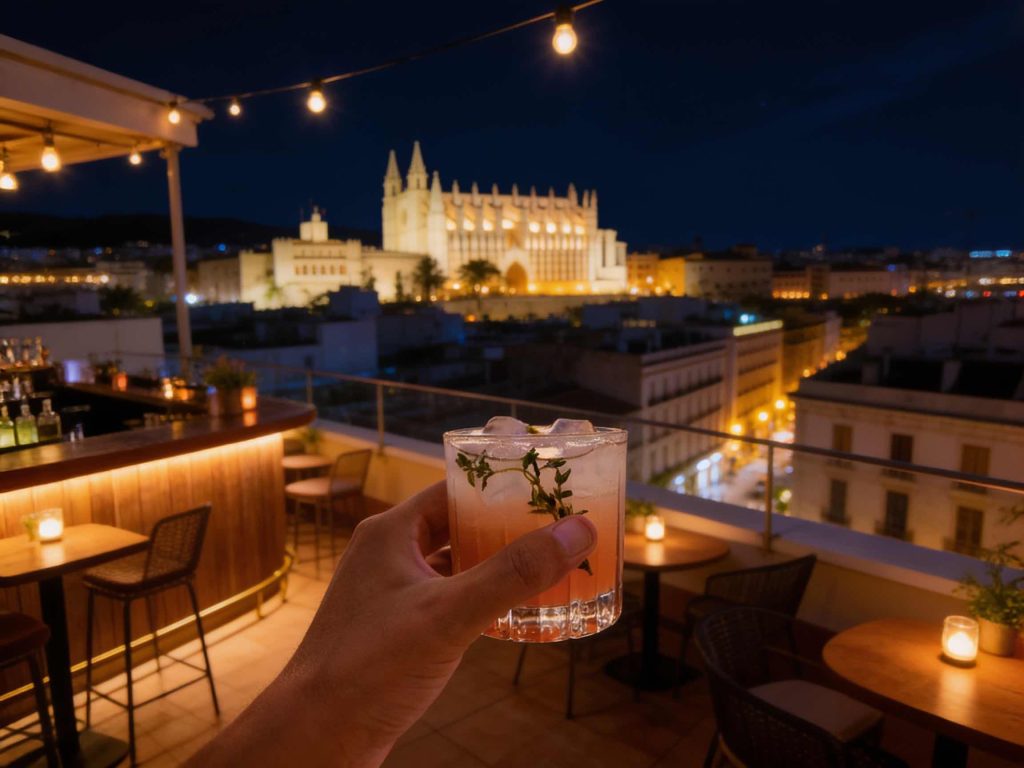
Start with a rooftop drink as the light drops in one of the many amazing bars in Palma. Several hotels in the centre open their terraces to the public, and a cocktail with the cathedral lit up below is hard to beat. From there, Santa Catalina is the natural place for dinner and the first few drinks, with its packed pavement tables and easy going crowd. Then, as the night builds, everything shifts down to the seafront.
The Paseo Marítimo is where Palma goes to dance. This stretch of Avinguda de Gabriel Roca is the centre of Palma’s nightclub scene, and it is where you will find Social Club. We are a nightclub built around music, curated lineups and unforgettable nights by the sea, with a programme that runs from headline DJ sets to ticketed shows and special events through the season. If you want the full picture of what is on while you are here, our events calendar lists everything coming up.
Whether you are visiting for a weekend or you live here, the Palma nightlife stops being a postcard and starts being a story. Come and be part of it.
Practical tips for visiting Palma
When is the best time to visit Palma?
Palma has a Mediterranean climate with hot summers and mild winters. April, May, September and October are the sweet spot, with warm days around 20 to 25 degrees, thinner crowds and comfortable weather for walking. July and August are hottest, often into the mid thirties, and busiest, especially when the cruise ships are in. Winter stays mild and makes a quiet, affordable city break if you do not mind the odd shower.
How many days do you need in Palma?
Two to three days is the sweet spot. That gives you time to see the cathedral and the palaces, wander the old town, eat well at the markets, spend an afternoon on the beach and still have a proper night out. If Palma is your base for exploring the rest of the island, add a day or two for trips like the train to Sóller.
Do you need a car in Palma?
Not for the city itself. Palma’s centre is compact and easy to explore on foot, and the beaches and Bellver Castle are reachable by bus or a short taxi. A car is only really worth it if you plan to take day trips out to the villages, coves and mountains, and even then you may prefer to leave it parked while you are in the city, where street parking is limited.
Getting from Palma airport into the city
Palma’s airport sits about 8 km east of the centre. The A1 airport bus runs into the city in around 30 minutes for a few euros, with stops near Plaça d’Espanya and Es Baluard. A taxi takes roughly 20 minutes and usually costs around €25 to €40. If you are heading to us on the Paseo Marítimo, you can find directions and nearby parking on our contact page.
Palma questions, answered
What is Palma de Mallorca known for?
Palma is best known for its huge seafront Gothic cathedral, La Seu, its historic old town, and its yacht filled harbour. It is also known for a strong food and market scene, sandy city beaches, and a lively going out culture that centres on the Paseo Marítimo seafront.
What is there to do in Palma at night?
Palma nights usually start with rooftop drinks and dinner in Santa Catalina, then move down to the Paseo Marítimo, the seafront strip where the city’s clubs and late bars are found. This is where Social Club sits, with DJ sets, ticketed shows and events running through the season.
What can you do in Palma when it rains?
A rainy day is a good excuse to go indoors. Tour the cathedral and the Royal Palace, spend time in the art museums like Es Baluard and the Fundació Miró, browse the covered food markets over a long lunch, or shop the independent stores in the old town. Palma works well whatever the weather.
What is there to do in Palma from the cruise port?
The cruise terminal is a short taxi or bus ride from the centre, so even on a day stop you can see plenty. Head straight for the cathedral and old town, wander the Paseo Marítimo, and stop for tapas at a market. With a full day, add Bellver Castle for the views over your ship and the bay.
Is Palma good for a city break?
Yes. Palma is one of the most complete city breaks in the Mediterranean, mixing history, food, beaches and nightlife in a small, walkable centre with an international airport. Two or three days is enough to see the highlights and enjoy an evening out, and it works year round.